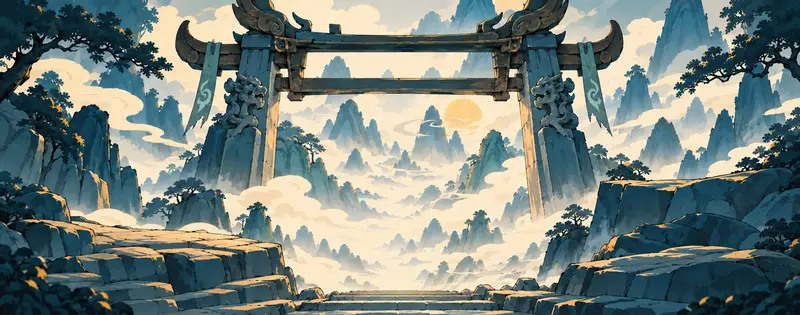
What is Chinese mythology?
Chinese mythology is the body of myths, legends and folk belief that grew up in China over more than three thousand years. It has no single canon and no founding poet. Instead the stories are scattered across early histories, books of philosophy, geographies such as the Shan Hai Jing, Daoist and Buddhist scriptures, temple traditions and the great Ming dynasty novels. Different centuries and different regions tell the same story in different ways, and the sources often disagree with one another. That is part of the subject, not a flaw in it.
Several layers sit on top of each other. The oldest are creation stories and culture heroes: Pangu who separated sky from earth, Nuwa who shaped people from clay and mended the sky, Fuxi, Shennong and the Yellow Emperor who taught humanity to farm, write and heal, and Yu the Great who tamed the floods. Alongside them stand the strange beasts and mountain gods of the Shan Hai Jing. Later came the organized Daoist heaven with the Jade Emperor at its head, Buddhist figures such as Guanyin who were absorbed and made Chinese, and the hugely popular gods of everyday religion: the God of Wealth, the Kitchen God, Guan Yu and Mazu. Finally the novels of the Ming dynasty, above all Journey to the West and Investiture of the Gods, fixed the versions most people know today.
Where the stories come from
Because there is no single scripture, every entry here names its sources. The ones we return to most often are the Shan Hai Jing, or Classic of Mountains and Seas, a geography of beasts and gods compiled before and during the Han dynasty; the Heavenly Questions in the Songs of Chu, a long poem that asks about the myths of its day; the Huainanzi, a Han dynasty compendium that preserves the fullest early versions of Nuwa and the archer Yi; the Records of the Grand Historian, whose opening chapters turn the sage kings into history; In Search of the Supernatural, a fourth century collection of strange tales; and the Ming novels Journey to the West and Investiture of the Gods.
Many creatures also live in dictionaries and ritual texts rather than in stories. The Shuowen Jiezi, the first Chinese dictionary, defines the dragon; the Book of Rites lists the four spirit animals; the Erya glosses the qilin. These short definitions are often the oldest evidence we have, and we quote them in the original with our own English translation.
How this encyclopedia works
Each entry opens with quick facts and a one-line answer, then goes to the texts: the original Chinese passage, our translation, and where it comes from. From there we follow the legend forward through later books, art and festivals, and say plainly when a popular detail is late or when the sources disagree. Where a creature also appears in our free browser game Beasts of Shanhai or in the Shan Hai Jing bestiary, we link across so you can see the original art and the game version.
The encyclopedia grows every week. We start with the figures people ask about most, the dragon, the Monkey King, the qilin, the pixiu, the gods and the great beasts, and add individual entries for gods, heroes, places and creatures from there.
Entries
- Chang'eGodThe goddess of the moon, wife of the archer Hou Yi. She took his elixir of immortality and has lived in the moon palace ever since.
- Chinese DragonCreatureThe long: a scaled spirit of water and rain that can shrink or grow at will, chief of all scaly creatures and the emblem of the emperor.
- Chinese Mythology CreaturesOverviewThe creatures of Chinese myth by group: dragons, the Four Symbols, the four spirit animals, the Four Perils, Shan Hai Jing beasts and folk monsters.
- Chinese GodsOverviewThe main Chinese gods by group: creators, sage kings, the Daoist heaven, Buddhist figures, gods of wealth and war, and the moon goddess Chang'e.
- Jade EmperorGodThe supreme ruler of heaven in Chinese popular religion: his Daoist birth story, his court of gods, his war with Sun Wukong and his New Year birthday.
- Journey to the WestOverviewThe Ming dynasty novel of the monk Tang Sanzang, the Monkey King and their companions on a pilgrimage to India: authorship, plot, ordeals and demons.
- KunlunPlaceThe holy mountain of Chinese myth: heaven's capital on earth, guarded by Luwu and the nine-headed Kaiming beast, and home of the Queen Mother of the West.
- NezhaGodThe rebel boy god of Investiture of the Gods: dragon fighter, lotus-born warrior on wind fire wheels and Third Prince of the Pagoda-Bearing Heavenly King.
- NianCreatureThe beast of the Chinese New Year legend, driven off by red, fire and noise. The story is modern; the customs, and the demon they first targeted, are far older.
- NuwaGodThe snake-tailed mother goddess who patched the broken sky with five-colored stones and shaped the first humans from yellow clay.
- PanguGodThe giant born in a cosmic egg who pushed heaven and earth apart. When he died, his breath became the wind and his eyes the sun and moon.
- PixiuCreatureA winged lion-like beast said to swallow wealth and never let it go. In the oldest texts it was a fierce animal and a symbol of brave troops.
- QilinCreatureA one-horned beast of perfect kindness that appears only under a wise ruler. One of the four spirit animals, and a bringer of sons.
- Sun WukongHeroThe Monkey King of Journey to the West: born from a stone, master of 72 transformations, rebel against heaven and finally a Buddha.
- Year of the GoatOverviewThe eighth sign of the Chinese zodiac. The next one is the Fire Goat year of 2027. Dates, goat or sheep, and what the old texts say the animal stands for.
The Shan Hai Jing bestiary
Our illustrated bestiary covers 43 creatures from the Classic of Mountains and Seas one by one, from the nine-tailed fox and Taotie to the faceless Hundun and the all-knowing Bai Ze. Every page gives the original entry, our translation and the creature's original art from the game.
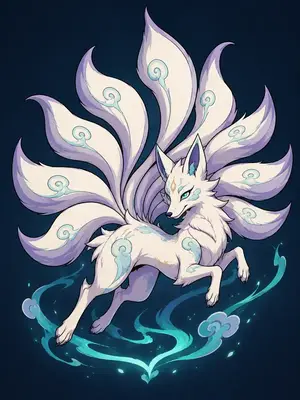 Nine-Tailed Fox 九尾狐A fox with nine tails and a cry like a baby's. It eats people, and eating it keeps curses away.
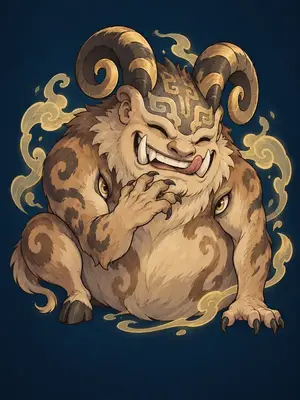 Taotie 饕餮A goat-bodied beast with a human face and eyes under its arms, so greedy it eats itself.
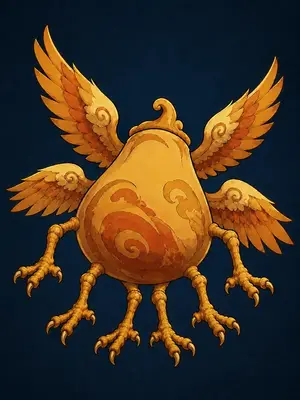 Hundun 混沌A faceless god like a red sack, with six legs and four wings. It has no eyes, yet it knows song and dance.
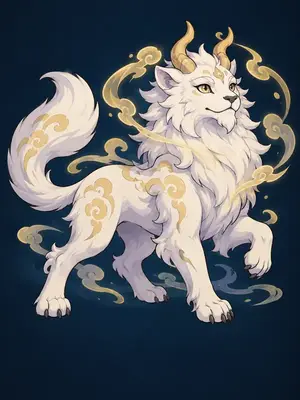 Bai Ze 白泽A talking beast that knows the nature of all things. Not in the Shan Hai Jing, but often counted among its creatures.
Play with the beasts
All 43 creatures in the bestiary are also units in Beasts of Shanhai, a free auto battler set in the world of the Shan Hai Jing. Build a team, counter the five elements and clear ten trials in your browser, no download or account needed.
Questions
What are the main gods of Chinese mythology?
The Jade Emperor rules heaven in the Daoist pantheon, above the Three Pure Ones in some systems and below them in others. Nuwa and Fuxi are the creator pair, Pangu separated sky from earth, and the most worshipped everyday gods include Guanyin, Guan Yu, the God of Wealth, Mazu and the Kitchen God. Our gods entry goes through each of them.
What is the most famous Chinese myth?
In the English-speaking world it is probably the story of Sun Wukong, the Monkey King, from Journey to the West. In China the stories of Nuwa mending the sky, Chang'e flying to the moon and the archer Yi shooting down nine suns are at least as well known.
Is Chinese mythology Daoist or Buddhist?
Both, and older than either. The earliest myths predate organized Daoism and the arrival of Buddhism. Daoism later built a heavenly bureaucracy out of older gods, Buddhism added figures such as Guanyin and the underworld kings, and popular religion mixed all of it together.
What are the Four Symbols?
The Azure Dragon of the east, the Vermilion Bird of the south, the White Tiger of the west and the Black Tortoise of the north. They stand for the four directions and seasons and appear on Han dynasty tombs, mirrors and tiles.
Where can I read the original texts?
Many of the sources exist in English translation in print. Each entry here quotes the relevant passage in the original Chinese with our own translation, so you can see exactly what the oldest text says.
More from Morrow Blue
- Game · Play free
Beasts of Shanhai
An auto battler built on Chinese mythology: build a team from 43 beasts, counter the five elements and clear ten trials. Free in your browser.
- Bestiary · Free
Shan Hai Jing Bestiary
Beasts and gods from the Classic of Mountains and Seas, each with original art, the source text and our own English translation.
- Daily game · Free
Beastle: Daily Beast
One beast from the Shan Hai Jing every day. Six tries to name it, starting from its silhouette.
- Daily game · Free
Deep Lore: Daily Myth Trivia
Five open questions on world myth every day. The rarer your right answer, the more it scores, and the rarer the beast it summons.