The Nine-Tailed Fox in Chinese Mythology
Where the nine-tailed fox comes from: the original Shan Hai Jing entry, what it means, and how a man-eating beast became a lucky omen and then a fox spirit known across Asia.
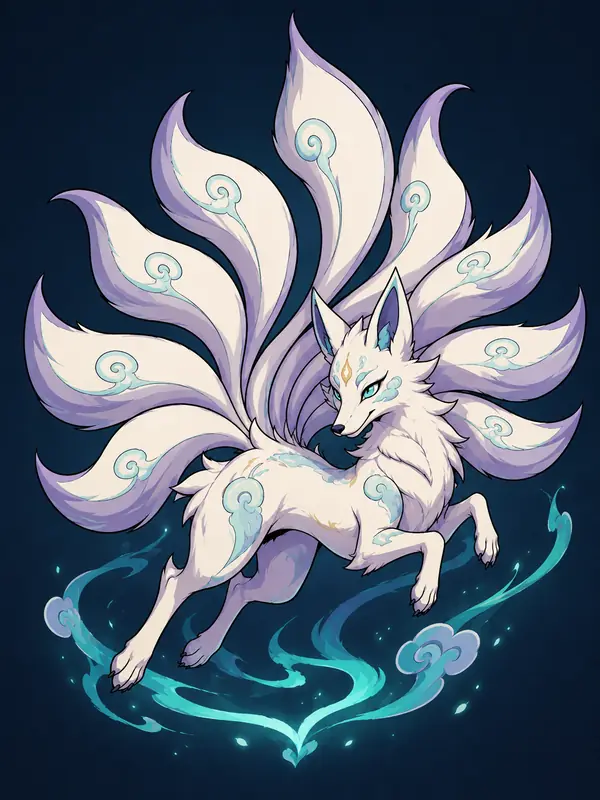
- Chinese name
- 九尾狐 (jiǔwěihú)
- Oldest source
- Shan Hai Jing, Southern Mountains, Book 1
- Where it lives
- Mount Qingqiu
- In the game
- Wood beast · 4 Gold · Charm
What the Shan Hai Jing says
The oldest description of the nine tailed fox is a single line in the Shan Hai Jing. In the first book of the Southern Mountains, the text reaches Mount Qingqiu, the Green Hill, with jade on its sunny slopes and blue-green pigment on its shady side, and then describes the beast that lives there.
有兽焉,其状如狐而九尾,其音如婴儿,能食人,食者不蛊。
A beast lives here, like a fox with nine tails and a cry like a baby's. It eats people. Whoever eats it is safe from curses.
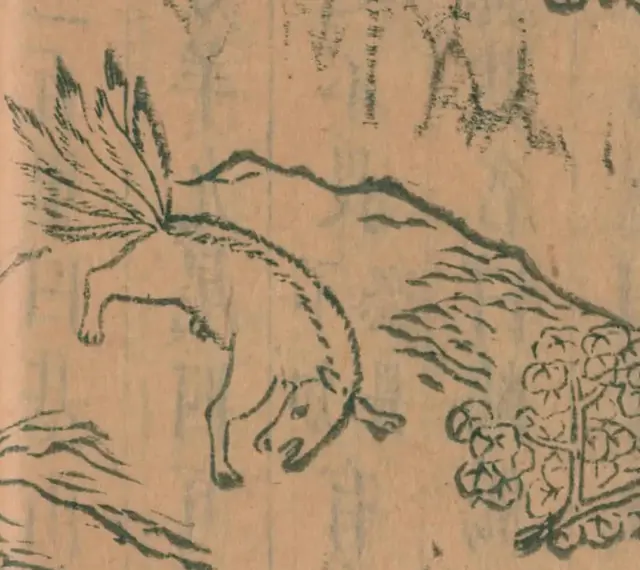
Three details stand out. It looks like a fox but has nine tails. Its cry sounds like a baby, a detail the book gives to several dangerous beasts. And it eats people, yet eating its meat protects you from gu, the curses and evil influences that early Chinese belief blamed for sickness.
From man-eater to lucky omen
By the Han dynasty the nine-tailed fox had become a good sign. Stone carvings in Han tombs show it among the auspicious animals around the Queen Mother of the West, and a later legend says Yu the Great saw a white nine-tailed fox just before he married, taking it as a sign that he would found a dynasty.
The fox spirit
Over the following centuries, foxes in Chinese stories became shape-shifters that could take human form, often as a beautiful woman who brings ruin. The best-known example is Daji in the Ming dynasty novel Investiture of the Gods, where a fox spirit, later pictured with nine tails, takes over the consort of the last Shang king and helps bring down the dynasty.
Is the nine-tailed fox Chinese, Japanese or Korean?
It started in China: the Shan Hai Jing entry is the oldest written source. The idea later spread to Japan, where it became the kyubi no kitsune, and to Korea, where it became the kumiho. Many modern anime, games and TV dramas draw on these later versions rather than on the original man-eating beast of Mount Qingqiu.
Nine-Tailed Fox in Beasts of Shanhai
In our free browser game Beasts of Shanhai, Nine-Tailed Fox is a Wood beast that costs 4 Gold. Its skill is Charm. At the start of a battle it charms the foe with the highest attack, and that foe's next attack hits its own side. At three stars it charms the top 2 foes, twice each.
Questions
Is the nine-tailed fox good or evil?
Both, depending on the period. The Shan Hai Jing describes a beast that eats people, Han dynasty art treats it as a lucky omen, and later stories turn it into a dangerous fox spirit.
Where does the nine-tailed fox live?
The Shan Hai Jing places it on Mount Qingqiu, the Green Hill, in the first book of the Southern Mountains. The mountain belongs to the book's legendary geography and has no agreed real location.
What happens if you eat a nine-tailed fox?
According to the Shan Hai Jing, whoever eats its meat is safe from gu, the curses and evil influences that early Chinese belief blamed for sickness.
More creatures
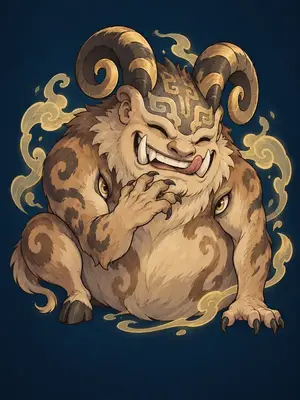 Taotie 饕餮A goat-bodied beast with a human face and eyes under its arms, so greedy it eats itself.
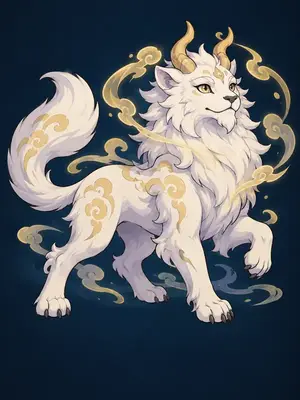 Bai Ze 白泽A talking beast that knows the nature of all things. Not in the Shan Hai Jing, but often counted among its creatures.
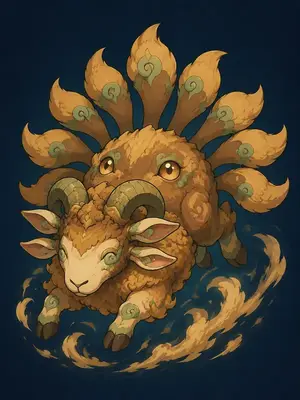 Boyi 猼訑A goat with nine tails, four ears and eyes on its back. Whoever wears it knows no fear.
 Chiru 赤鱬A red fish with a human face and a voice like a mandarin duck. Eating it keeps scabies away.
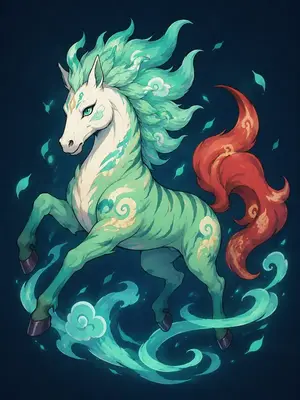 Lushu 鹿蜀A horse with a white head, tiger stripes and a red tail, singing as it calls. Wearing its hide blesses a family with many descendants.
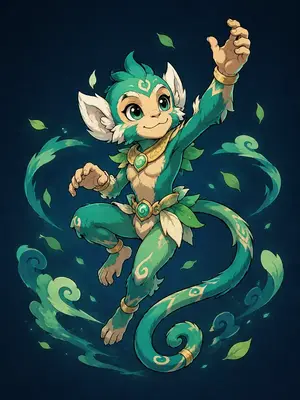 Xingxing 狌狌A white-eared ape that crawls on all fours or runs upright like a man. Eat it and you will run fast.