Chiru, the Red Human-Faced Fish of the Shan Hai Jing
The chiru is a red fish with a human face that lives in the Ying River below Mount Qingqiu. It sounds like a mandarin duck, and eating it keeps skin disease away.

- Chinese name
- 赤鱬 (chìrú)
- Oldest source
- Shan Hai Jing, Southern Mountains, Book 1
- Where it lives
- Ying River, Mount Qingqiu
- In the game
- Water beast · 1 Gold · Water Heal
What the Shan Hai Jing says
Mount Qingqiu, in the first book of the Southern Mountains, is best known for the Nine-Tailed Fox. After describing the fox and a bird of the mountain, the text follows the Ying River, which rises there and flows south into the Jiyi Marsh. In the river live many chiru: fish with human faces, whose voices sound like mandarin ducks. Whoever eats one will never suffer from scabies.
英水出焉,南流注于即翼之泽。其中多赤鱬,其状如鱼而人面,其音如鸳鸯,食之不疥。
The Ying River rises here and flows south into the Jiyi Marsh. In it are many Chiru, shaped like fish with human faces. They sound like mandarin ducks. Whoever eats one never gets scabies.
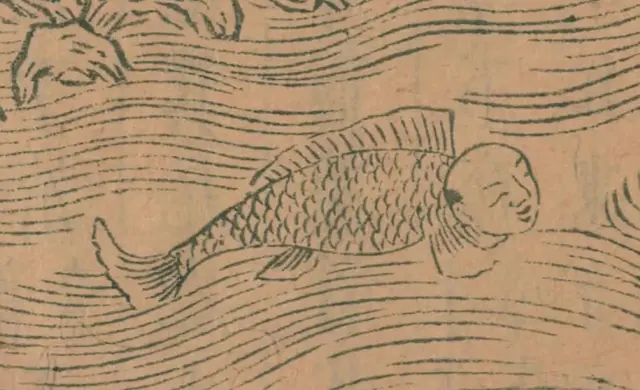
The name tells us the color: chi means red, and ru is a rare character used almost only for this fish. Mount Qingqiu is one of the richest stops in the first Southern range, and three of its creatures come with uses for people: eating the fox keeps curses away, wearing the bird called the guanguan keeps you from confusion, and eating the chiru protects the skin.
Human-faced fish in the Shan Hai Jing
The chiru is one of several creatures in the book that mix a fish body with something human or something from another animal. Elsewhere there are fish with bird wings, like the Luoyu of the Western Mountains, and fish with many bodies, like the Heluoyu of the north. The voice of a mandarin duck is a gentle detail for such a strange face, and it suggests the chiru was more of a curiosity than a danger: nothing in the text says it harms anyone.
Why a cure for scabies?
Skin disease was a common and miserable problem in the ancient world, and the Shan Hai Jing records many cures for rashes, scabies, boils and swellings, often from fish. Lists like these suggest that part of the book worked as a practical record of what each river held and what each catch was good for. In that light, the chiru reads less like a monster and more like a prized local fish, remembered for the one thing it could do.
Chiru in Beasts of Shanhai
In Beasts of Shanhai, our browser game built on these creatures, the chiru keeps its healing role. It is a small, cheap Water beast that does little while it lives, but when it falls, every Water beast on your side heals part of its own health, and the amount grows with its star level. It is a natural partner for other Water beasts and a quiet reason to build a team around one element.
Red Merfish in Beasts of Shanhai
In our free browser game Beasts of Shanhai, Red Merfish is a Water beast that costs 1 Gold. Its skill is Water Heal. Last Breath: all your Water beasts heal 20% of their own max HP (at least 2). At two stars they heal 30% (at least 4), and at three stars 40% (at least 6).
Questions
What is a chiru in Chinese mythology?
The chiru is a red fish with a human face from the Shan Hai Jing. It lives in the Ying River, which rises on Mount Qingqiu.
What does a chiru sound like?
The Shan Hai Jing says its voice sounds like a mandarin duck.
What happens if you eat a chiru?
According to the Shan Hai Jing, whoever eats one will never get scabies.
More creatures
 Nine-Tailed Fox 九尾狐A fox with nine tails and a cry like a baby's. It eats people, and eating it keeps curses away.
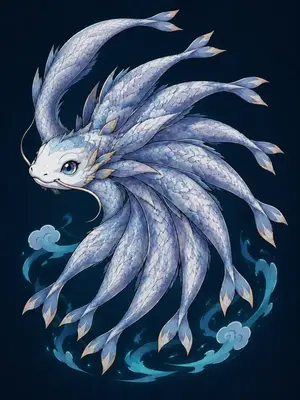 Heluoyu 何罗鱼A fish with one head and ten bodies that barks like a dog. Eating it cures boils.
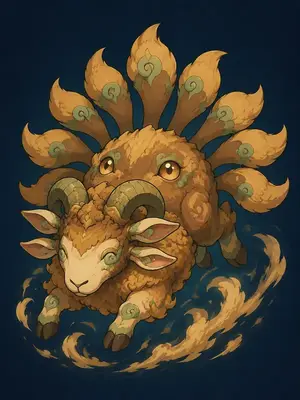 Boyi 猼訑A goat with nine tails, four ears and eyes on its back. Whoever wears it knows no fear.
 Lushu 鹿蜀A horse with a white head, tiger stripes and a red tail, singing as it calls. Wearing its hide blesses a family with many descendants.
 Xingxing 狌狌A white-eared ape that crawls on all fours or runs upright like a man. Eat it and you will run fast.
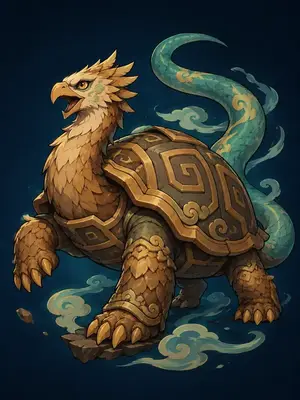 Xuangui 旋龟A turtle with a bird's head and a viper's tail, whose voice sounds like splitting wood. Wearing it keeps deafness away.