Lushu, the Singing Striped Horse of Mount Niuyang
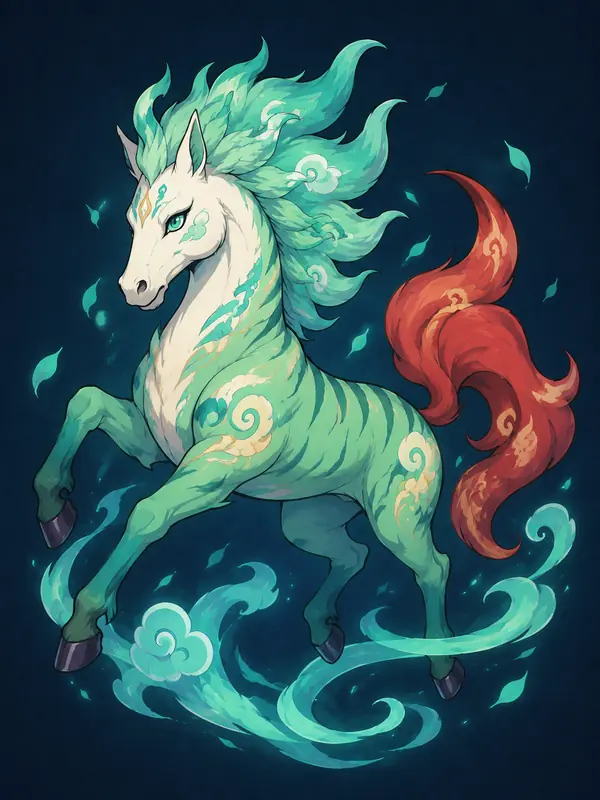
Lushu lives on Mount Niuyang in the first Southern book: a horse with a white head, tiger stripes and a red tail whose voice sounds like singing. Wearing it blesses a family with children.
- Chinese name
- 鹿蜀 (lùshǔ)
- Oldest source
- Shan Hai Jing, Southern Mountains, Book 1
- Where it lives
- Mount Niuyang
- In the game
- Wood beast · 1 Gold · Fawn Call
What the Shan Hai Jing says
The Lushu lives on Mount Niuyang, in the first book of the Southern Mountains, the same book that begins the whole Shan Hai Jing and later reaches the Nine-Tailed Fox of Mount Qingqiu. The text says the sunny side of Mount Niuyang is rich in red metal and the shady side in white metal. The beast is shaped like a horse with a white head. It is striped like a tiger and has a red tail. Its voice is compared to yao, a song sung without accompaniment. Its name is Lushu. The last line gives its use: wearing it, that is, carrying its hide or a part of it, makes a family prosper with many children and grandchildren.
有兽焉,其状如马而白首,其文如虎而赤尾,其音如谣,其名曰鹿蜀,佩之宜子孙。
A beast lives here, like a horse with a white head, striped like a tiger, with a red tail. Its voice is like singing. It is called the Lushu. Wearing it blesses one with many descendants.
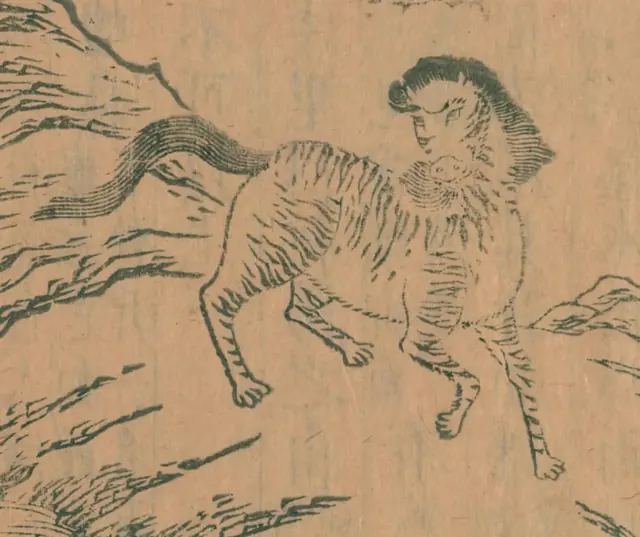
A charm for a large family
Many Shan Hai Jing creatures are useful as well as strange. Some are eaten to cure illness, some are worn to ward off harm, and a few, like the Lushu, are worn for fertility. Having many sons and grandsons was among the most important blessings in early Chinese life, because the family line and the care of ancestors depended on it. The same promise, "good for descendants", appears elsewhere in the mountain books, for example in a tree on Mount Chongwu in the Western Mountains whose fruit is said to help a family have children.
The river below and the zebra question
Mount Niuyang also has a famous river creature. The Guai River flows east from the mountain, and in it live black turtles with bird heads and snake tails, the Xuangui, whose cry sounds like splitting wood. Wearing a Xuangui is said to keep you from going deaf. Modern readers often notice that a white-headed horse covered in tiger stripes sounds a little like a zebra. There is no evidence that the compilers knew African animals, and the red tail and singing voice belong firmly to myth, but the resemblance is one reason the Lushu is so often drawn today.
The Lushu in our game
In Beasts of Shanhai we turned the blessing of descendants into a battle skill. The Lushu stands at the front and draws attacks, and when it falls, fawns appear in its place, so its line goes on even after it is gone. Its white head, tiger stripes and red tail come straight from the text. It is a wood beast costing just 1 Gold, which makes it an easy early guard for any team.
Luck Deer in Beasts of Shanhai
In our free browser game Beasts of Shanhai, Luck Deer is a Wood beast that costs 1 Gold. Its skill is Fawn Call. Guard. Last Breath: it summons a 1/1 Fawn in its place. At two stars the Fawn is 2/2, and at three stars it summons 2 Fawns at 3/3.
Questions
What does the Lushu do?
According to the Shan Hai Jing, wearing a Lushu blesses a family with many descendants.
What does the Lushu look like?
Like a horse with a white head, tiger stripes and a red tail. Its voice sounds like singing.
Is the Lushu a zebra?
Not as far as anyone can show. Its stripes remind modern readers of a zebra, but the Shan Hai Jing presents it as a mythical beast of Mount Niuyang with a red tail and a singing voice.
More creatures
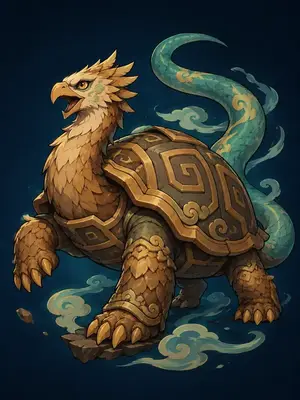 Xuangui 旋龟A turtle with a bird's head and a viper's tail, whose voice sounds like splitting wood. Wearing it keeps deafness away.
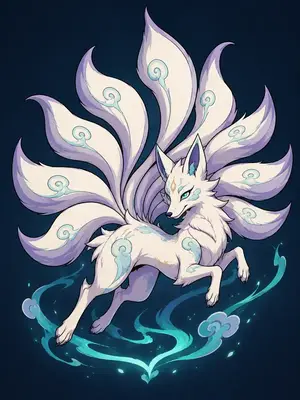 Nine-Tailed Fox 九尾狐A fox with nine tails and a cry like a baby's. It eats people, and eating it keeps curses away.
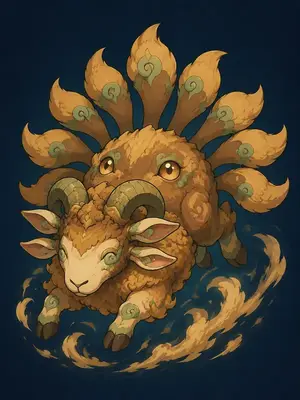 Boyi 猼訑A goat with nine tails, four ears and eyes on its back. Whoever wears it knows no fear.
 Chiru 赤鱬A red fish with a human face and a voice like a mandarin duck. Eating it keeps scabies away.
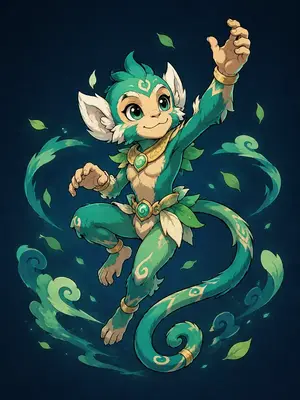 Xingxing 狌狌A white-eared ape that crawls on all fours or runs upright like a man. Eat it and you will run fast.
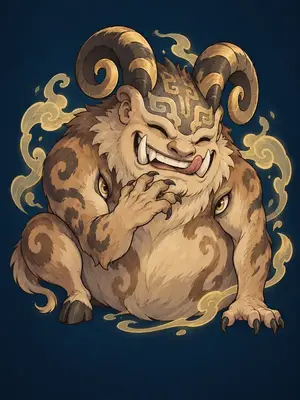 Taotie 饕餮A goat-bodied beast with a human face and eyes under its arms, so greedy it eats itself.