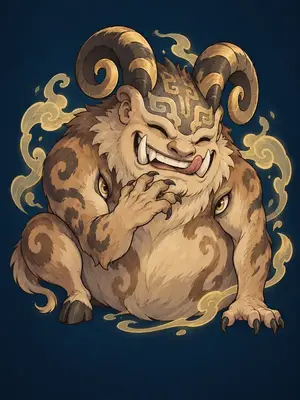
Pixiu: the Chinese Beast of Wealth and Protection
Today the pixiu guards shop doors and wrists as a bringer of wealth. In the oldest Chinese books it was something else: a fierce beast that stood for soldiers.
- Chinese name
- 貔貅 (píxiū)
- Also known as
- Pi Yao, Pi Xiu, Tianlu, Bixie
- Type
- Mythical creature
- First recorded
- Zhou dynasty texts, as a fierce wild animal
- Known for
- Drawing in wealth and keeping it, warding off evil
- Related forms
- Tianlu and bixie, the winged stone beasts of Han tombs
- Found today
- Shop entrances, jewelry stores, home altars and bracelets
What is a pixiu?
A pixiu is a Chinese mythical beast that people keep for wealth and protection. Statues of the pixiu sit at the doors of shops, banks and jewelry stores across the Chinese-speaking world, and small carved pixiu are worn on bracelets and pendants. The popular belief is simple: the pixiu eats gold and silver and never lets any of it out, so it draws money in and keeps it from leaving. It is also said to frighten away evil spirits, which makes it a guardian as well as a lucky charm.
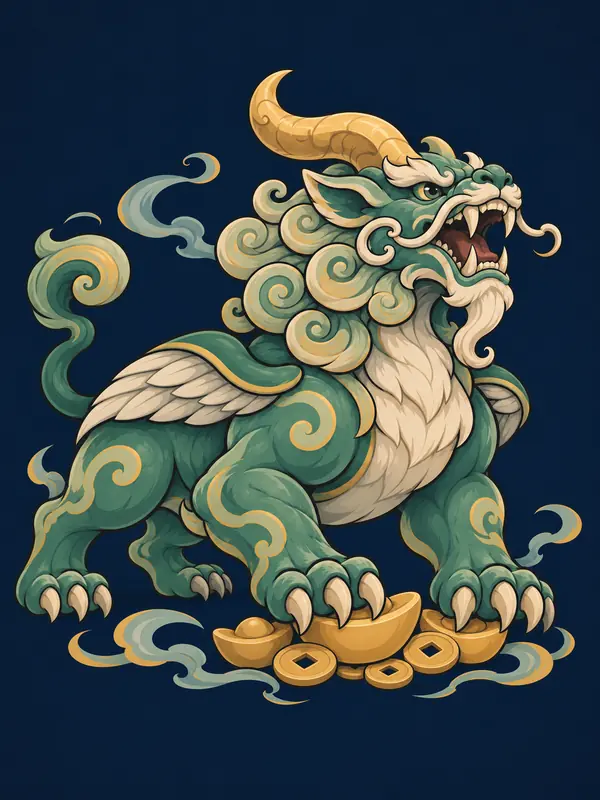
The name is written with two characters, pi and xiu, and is pronounced roughly "pee-shyoo". In Cantonese-speaking places such as Hong Kong it is often called pi yao. Modern figures usually show a crouching beast with a dragon-like head, a lion-like body, small wings, a curling mane and one or two horns.
What most guides leave out is that the pixiu was not always a wealth beast. In the oldest Chinese texts, written more than two thousand years ago, pixiu were fierce wild animals, and the word was a byword for brave soldiers. The money-loving pixiu is a much later idea. This entry follows the beast from those early texts to the bracelet on your wrist.
Pixiu meaning: wealth, keeping wealth and warding off evil
The pixiu meaning most people know today has three parts, and all three are folk belief rather than anything written in the ancient books.
- Bringing in wealth: the pixiu is said to love the smell of gold and silver and to go out and gather it for its owner.
- Keeping wealth: because it is said to have no way to pass what it eats, money that comes in stays in. This is why it is popular with shopkeepers, traders and gamblers.
- Warding off evil: like many guardian beasts, it is believed to scare away bad luck, harmful spirits and illness.
A common folk tale explains the habit. In one version the pixiu is a son of the dragon who broke a rule of heaven, and the Jade Emperor punished him so that he could only eat gold, silver and jewels and never pass them out again. Other versions tell the story differently, and none of them comes from an early written source. They are best read as later folk tradition that grew up to explain a beast people were already buying.
Pixiu appearance: head, horns, wings and no rear opening
There is no single fixed image of the pixiu. Carvings from different periods mix features from several animals, and the modern figure is a blend that settled only in recent centuries.
- Head: broad and fierce, often described as dragon-like, with bulging eyes and a wide mouth.
- Body: thick and powerful, usually compared to a lion or a big cat.
- Wings: small wings at the shoulders, a trace of the winged stone beasts of early tombs.
- Horns: one or two, swept back along the head.
- Mouth and rear: a big mouth for swallowing treasure and, in later folk tradition, no anus at all.
That last feature is the most famous and the most recent. The idea that the pixiu has a mouth but no rear opening, so that treasure only goes in and never comes out, is later folk tradition. It does not appear in the early texts quoted below, and the stone beasts of ancient tombs were not carved that way. It is a modern explanation for why the beast is good at keeping money.
The greedy mouth makes an interesting contrast with another beast from Chinese myth, the Taotie, a glutton so hungry that it eats its own body. The Taotie's endless hunger is a warning against greed; the pixiu's endless hunger is turned into a blessing for its owner.
Pixiu in the oldest texts: a beast of war, not of wealth
In the oldest texts the pixiu is a real or semi-real wild animal and a symbol of fighting strength. There is no talk of money at all. One early use of the character pi comes in a speech the Book of Documents gives to King Wu of Zhou, addressing his army before the battle that overthrew the Shang dynasty.
尚桓桓,如虎、如貔、如熊、如羆,于商郊。
Be bold and martial, like tigers, like pi, like bears, like brown bears, on the outskirts of Shang.
The same idea appears in the Records of the Grand Historian, written by Sima Qian around 100 BCE. Its first chapter tells how the Yellow Emperor prepared to fight the Yan Emperor.
教熊羆貔貅貙虎,以與炎帝戰於阪泉之野。
He trained bears, brown bears, pi, xiu, chu and tigers, and with them fought the Yan Emperor in the wilds of Banquan.
Readers have argued for a long time about whether the Yellow Emperor really drove animals into battle or whether these are the names of clans or units that took fierce beasts as their emblems. Either way, pixiu here belong with bears and tigers: strong, dangerous, and on the battlefield.
The Book of Rites shows the pixiu in military signals. When an army was on the march, the banner carried at the front told those behind what lay ahead.
前有士師則載虎皮,前有摯獸則載貔貅。
If there are troops ahead, raise the tiger skin; if there are fierce beasts ahead, raise the pixiu.
Because of passages like these, the word pixiu came to mean brave soldiers in later Chinese writing. Poets and historians called a fine army an army of pixiu long before anyone thought of the beast as a bringer of wealth.
Early dictionaries treat the pi as a wild cat. The Shuowen Jiezi, the first Chinese dictionary, compiled by Xu Shen around 100 CE, places it among the leopards.
貔:豹屬,出貉國。
Pi: a kind of leopard. It comes from the land of the Mo.
The Mo were a northern people in early Chinese records. The same dictionary entry quotes a line from the Book of Songs, from a poem about a lord of the northern state of Han receiving the Mo and other peoples as his subjects.
獻其貔皮,赤豹黃羆。
They offered the skins of pi, red leopards and yellow bears.
So in its oldest layer the pi was a fur-bearing beast of the north, valued for its pelt and feared for its strength. Nobody today can say which real animal, if any, the word first named. What is clear is that the leap from fierce leopard-like animal to winged lucky charm happened over many centuries.
Tianlu and bixie: the winged stone beasts
Tianlu and bixie are the names of the winged stone beasts that guarded tombs in the Han dynasty and after, and they are the main link between the ancient pi and the modern pixiu. Large stone animals with wings, horns and open mouths stood in pairs along the spirit roads leading to important tombs. Eastern Han examples have been found around Nanyang in Henan, and the most famous later ones stand at the royal tombs of the Southern Dynasties around Nanjing.
Tianlu means heavenly blessing and bixie means warding off evil. A note by Meng Kang, a third century commentator on the History of the Han, describes a deer-like beast with a long tail from the western regions: those with one horn may be called tianlu and those with two horns bixie. Later writers repeated the rule "one horn tianlu, two horns bixie", although surviving carvings do not always follow it, and scholars still debate which name belongs to which statue.
Over time these protective tomb guardians, the old word pixiu and a growing belief in a beast that brings fortune blended together. The modern pixiu still carries the wings, the horns and the job of keeping evil away.
Male and female pixiu
Pixiu are often sold in pairs, and one common modern explanation splits the name between them: pi is the male and xiu is the female. In this explanation the male brings wealth in and the female guards it at home, so a pair does both jobs. Some sellers also say the one-horned beast is male and the two-horned beast is female, borrowing the old tianlu and bixie rule.
None of this appears in the ancient texts, where pixiu is simply the name of a fierce animal. It is a modern folk custom, and different regions and craftsmen tell it differently.
Pixiu in feng shui: where to place a statue
In feng shui, the Chinese art of arranging spaces for good fortune, the pixiu is treated as a guardian that pulls wealth in from outside. Advice varies, but these are the folk rules repeated most often:
- Face it outward: place the pixiu so its head faces the main door or a window, so it can catch wealth coming in from outside.
- Do not face the bed: many guides say a fierce guardian should not stare at people while they sleep, so keep it out of the bedroom or turned away from the bed.
- Do not face a mirror: the reflection is said to confuse the pixiu or bounce its power back.
- Keep it high and clean: set it on a table or shelf rather than the floor, and keep it free of dust.
- Place a pair where possible: a pair is said to balance gathering wealth and keeping it.
Some owners have a new pixiu blessed at a temple before use, a custom often called opening the light. Folk sayings also warn against letting other people touch your pixiu, since it is supposed to recognize only its owner. These are customs, not rules from any ancient source, and practice differs from place to place.
The pixiu bracelet: how it is worn
The pixiu bracelet, a string of beads with a single carved pixiu, is the most common way people carry one. The folk advice on wearing it is fairly consistent, though it varies in the details.
- Which hand: most folk advice says the left hand, following the saying that the left hand takes in and the right hand gives out.
- Which way it faces: the pixiu's head should point outward, toward the fingers, so it can catch wealth from outside rather than facing back up your arm.
- Materials: black obsidian is popular because it is also believed to absorb bad energy; jade is the traditional choice for protection; gold and silver are worn as well.
- Care: some people take it off to sleep or bathe, and many avoid letting others handle it.
People choose a material for meaning as much as for looks. A pixiu bracelet is a charm worn for hope and habit, and any of these customs is a matter of personal belief rather than a fixed rule.
Pixiu vs qilin vs dragon
The pixiu, the qilin and the dragon are often confused in shops and carvings, and they can look alike, but they mean different things.
- Pixiu: a fierce winged beast, today mainly a charm for gaining and keeping wealth and for guarding a home or business.
- Qilin: a gentle omen of a wise ruler or the birth of a great child, often shown with scales, hooves and a single horn. See our entry on the qilin.
- Dragon: the great water and rain power of Chinese myth, a symbol of the emperor and of good fortune in general. See our entry on the Chinese dragon.
A quick way to tell them apart in a carving: the pixiu usually crouches with wings and a big open mouth, the qilin stands on hooves with a calm face, and the dragon has a long snake-like body with claws. More beasts of this kind are gathered in our entry on Chinese mythical creatures.
Pixiu today
Today the pixiu is one of the most visible lucky beasts in Chinese communities. Gold shops and jewelry stores often keep one by the counter, businesses set a pair at the entrance, people place one near where they buy lottery tickets or keep their accounts, and many carry a small pixiu on a phone strap, a car mirror or a bracelet. It is a very old word wearing very new clothes.
For other creatures from Chinese myth, with the original texts and our translations, see the Shan Hai Jing bestiary, or meet them as units in our free browser game Beasts of Shanhai.
Questions
What is a pixiu?
A pixiu is a Chinese mythical beast with a lion-like body, wings and horns, kept today as a charm to bring in wealth, keep it and ward off evil. In the oldest texts it was a fierce wild animal and a symbol of soldiers.
How do you pronounce pixiu?
Roughly "pee-shyoo". In Cantonese it is often called pi yao.
Which hand should a pixiu bracelet go on?
Most folk advice says the left hand, with the pixiu's head pointing outward toward the fingers. This is custom rather than a fixed rule, and advice varies.
Where should a pixiu face at home?
Folk feng shui says it should face the main door or a window to draw wealth in, and should not face a bed or a mirror.
Does a pixiu really have no anus?
That is later folk tradition, used to explain why it keeps wealth. The ancient texts describe the pixiu as a fierce animal and say nothing of the kind.
What is the difference between a pixiu and a qilin?
The pixiu is a fierce winged beast linked to wealth and protection; the qilin is a gentle omen of wise rule and the birth of great children.
Is the pixiu male or female?
One common modern explanation says pi is the male and xiu the female, so they are often sold in pairs. The ancient texts do not make this distinction.
Related entries
- Chinese DragonCreatureThe long: a scaled spirit of water and rain that can shrink or grow at will, chief of all scaly creatures and the emblem of the emperor.
- QilinCreatureA one-horned beast of perfect kindness that appears only under a wise ruler. One of the four spirit animals, and a bringer of sons.
- Chinese Mythology CreaturesOverviewThe creatures of Chinese myth by group: dragons, the Four Symbols, the four spirit animals, the Four Perils, Shan Hai Jing beasts and folk monsters.