The Biyi Bird: Two Birds Flying Wing to Wing
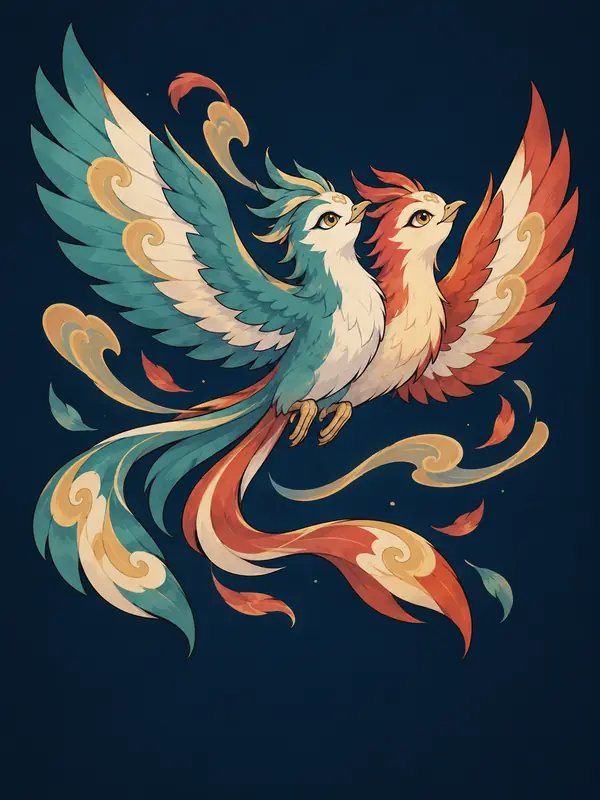
The biyi bird is really two birds, green and red, that can only fly together, which made them a lasting Chinese image of a couple who cannot be parted.
- Chinese name
- 比翼鸟 (bǐyìniǎo)
- Oldest source
- Shan Hai Jing, Beyond the Seas: South
- Where it lives
- East of the Southern Mountain
- In the game
- Fire beast · 3 Gold · Wing to Wing
What the Shan Hai Jing says
The Beyond the Seas: South book describes the lands along the southern rim of the world, one after another, and among them it notes the biyi birds, living to the east of the land just mentioned, or, as another version of the text says, east of the Southern Mountain. The description is brief: the birds are green and red, and two birds fly wing to wing. The name itself means birds that join their wings, and the whole entry rests on that single image.
比翼鸟在其东,其为鸟青、赤,两鸟比翼。一曰在南山东。
The Biyi birds live to its east. They are green and red; two birds fly wing to wing. Some say they live east of the Southern Mountain.
A fuller picture comes from the third book of the Western Mountains. On Mount Chongwu lives a bird like a wild duck with only one wing and one eye; two of them must join before they can fly. It is called the manman, and when it appears there are great floods. Many readers treat the manman and the biyi bird as the same creature, which shows how a bird of ill omen could later become a gentle symbol.
The Erya and the jianjian
The Erya, one of the earliest Chinese dictionaries, lists the paired-wing bird among the wonders of the four directions. It places the bird in the south, says it cannot fly unless it is paired, and gives its name as jianjian. Because each bird has only one wing, the pair becomes whole only when the two fly together. That idea of two halves that need each other is what later writers took up, long after the floods of Mount Chongwu were forgotten.
A symbol of undying love
The most famous use is in the Song of Everlasting Regret, a long poem by the Tang dynasty poet Bai Juyi about Emperor Xuanzong and his consort Yang Guifei. Near the end, the lovers swear that in heaven they will be paired-wing birds, and on earth two trees whose branches grow into one. Since then the biyi bird has stood for a couple bound for life, and it appears in wedding wishes, love poems and paintings, often beside the joined branches from the same line.
Biyi birds in Beasts of Shanhai
In Beasts of Shanhai, our browser game built on these creatures, the paired birds keep their bond in a game rule. When the biyi bird dies, it passes its attack and half its health to the stronger of its two neighbors, so its partner keeps fighting with both strengths. At three stars it hands over its full health. For the other great bird of Chinese love and good fortune, see the Fenghuang, the Chinese phoenix.
Twinwing Bird in Beasts of Shanhai
In our free browser game Beasts of Shanhai, Twinwing Bird is a Fire beast that costs 3 Gold. Its skill is Wing to Wing. Last Breath: passes its attack and half its max HP to the neighbor with higher attack for the rest of the battle. At three stars it passes its full max HP.
Questions
What is a biyi bird?
The biyi bird is a pair of birds, one green and one red, that fly wing to wing. It appears in the Beyond the Seas: South book of the Shan Hai Jing.
What does the biyi bird symbolize?
A couple who cannot be parted. The image is best known from Bai Juyi's Song of Everlasting Regret, where two lovers vow to be paired-wing birds in heaven.
Does the biyi bird have only one wing?
The Erya says it cannot fly unless paired, and the related manman of the Western Mountains has one wing and one eye, so two must join to fly. The Shan Hai Jing's own biyi entry only says they fly wing to wing.
More creatures
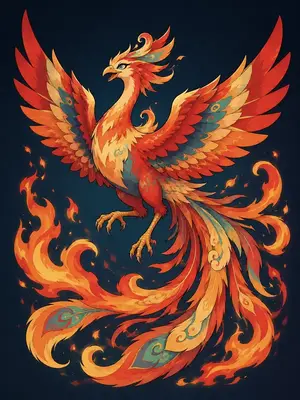 Fenghuang 凤皇A five-colored bird like a rooster whose markings spell out virtues. When it appears, the world is at peace.
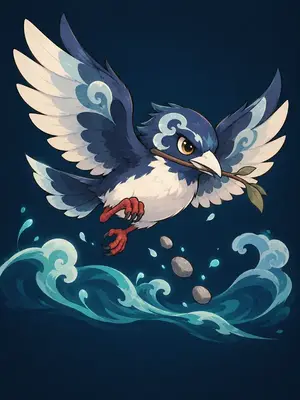 Jingwei 精卫A small crow-like bird with a patterned head, white beak and red feet, calling its own name as it carries stones to fill the sea.
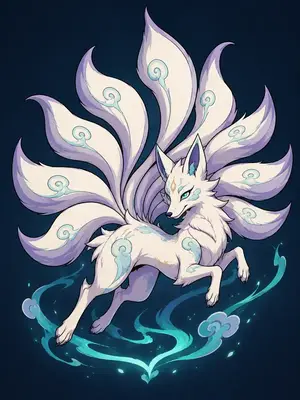 Nine-Tailed Fox 九尾狐A fox with nine tails and a cry like a baby's. It eats people, and eating it keeps curses away.
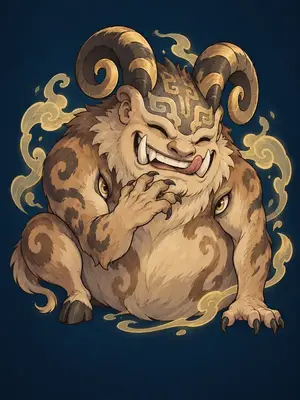 Taotie 饕餮A goat-bodied beast with a human face and eyes under its arms, so greedy it eats itself.
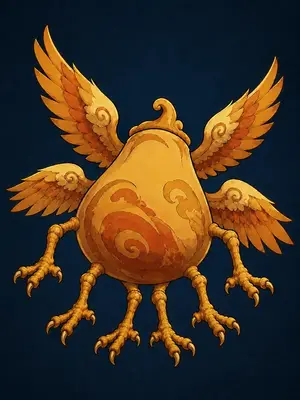 Hundun 混沌A faceless god like a red sack, with six legs and four wings. It has no eyes, yet it knows song and dance.
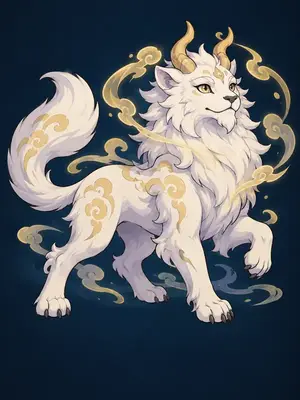 Bai Ze 白泽A talking beast that knows the nature of all things. Not in the Shan Hai Jing, but often counted among its creatures.