Fenghuang: the Phoenix of Chinese Mythology
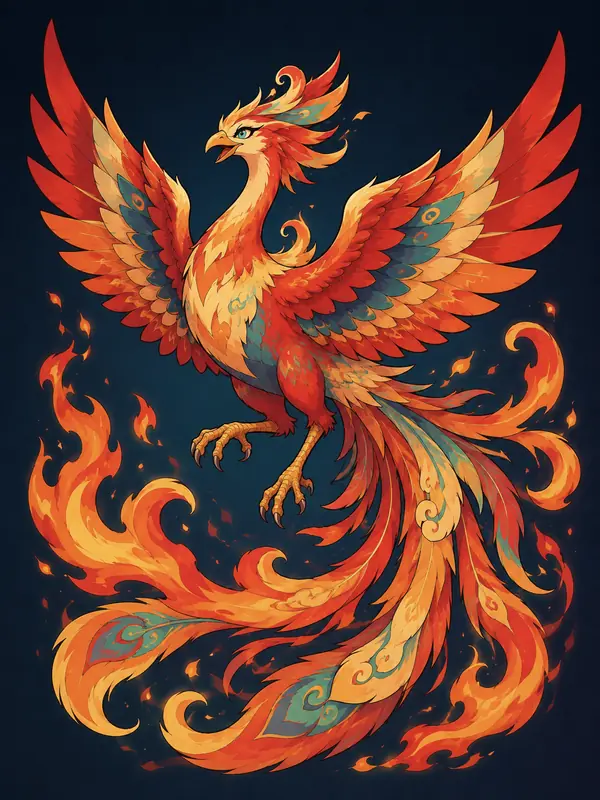
The fenghuang is the Chinese phoenix: a five-colored bird whose markings spell out virtues, which sings and dances by itself and appears only when the world is at peace.
- Chinese name
- 凤皇 (fènghuáng)
- Oldest source
- Shan Hai Jing, Southern Mountains, Book 3
- Where it lives
- Mount Danxue
- In the game
- Fire beast · 2 Gold · Phoenix Rise
What the Shan Hai Jing says
The fenghuang lives on Mount Danxue, the Cinnabar Cave Mountain, in the third book of the Southern Mountains. The Shan Hai Jing says it looks like a rooster, with five colors and patterns on its feathers. Then comes a striking detail: the markings on its body form words. On its head the pattern reads virtue, on its wings duty, on its back rite, on its breast kindness and on its belly trust.
有鸟焉,其状如鸡,五采而文,名曰凤皇,首文曰德,翼文曰义,背文曰礼,膺文曰仁,腹文曰信。是鸟也,饮食自然,自歌自舞,见则天下安宁。
A bird lives here, like a rooster, five-colored and patterned, called the Fenghuang. The marks on its head read Virtue, on its wings Duty, on its back Rite, on its breast Kindness, on its belly Trust. It eats and drinks as it pleases, and sings and dances by itself. When it appears, the world is at peace.
These are key virtues of early Confucian thought, so the bird is a living emblem of good government. It eats and drinks as it pleases, sings and dances by itself, and when it appears the whole world is at peace. Unlike most creatures in the book, it threatens no one and cures nothing. It is simply a sign that the age is a good one.
The fenghuang in the Erya and the Shuowen
Later books gave the bird a more detailed body. Guo Pu, in his notes on the Erya, one of the earliest Chinese dictionaries, describes it with a rooster's head, a snake's neck, a swallow's chin, a turtle's back and a fish's tail, five-colored and about six feet tall. The Shuowen Jiezi, the great Han dynasty dictionary, calls the feng a sacred bird that comes from the eastern land of gentlemen, and says that when it is seen the world is at peace, echoing the Shan Hai Jing.
The bird also mattered to Confucius. In the Analects he sighs that the phoenix does not come and the river gives up no chart, a sign to him that no sage ruler would rise in his lifetime and that his hopes would not be fulfilled. The line shows how firmly the bird was tied to good rule: its arrival was something a whole age could earn, and its absence was something a wise man could mourn. That idea runs straight back to the Shan Hai Jing's promise of peace.
Feng and huang
The name joins two words. In later tradition feng is the male bird and huang the female, and together they came to stand for a loving couple, and also for the empress, paired with the dragon of the emperor. The Shan Hai Jing writes huang with a character meaning sovereign or august; later texts usually write it with the bird element added. Either way, the fenghuang is a bird of rulers, harmony and good fortune, not of danger.
Is the fenghuang a phoenix?
English calls it the Chinese phoenix, but the two birds come from different traditions. The phoenix of Greek and Roman writers is a single bird that renews itself after death, in many versions by fire. The early Chinese sources say nothing about death or rebirth: the fenghuang is a bird of virtue and peace. In Beasts of Shanhai we gave it a rebirth skill because players expect a phoenix to rise again, but that part is ours, not the Shan Hai Jing's. For another bird of love, see the Biyi Bird.
Phoenix in Beasts of Shanhai
In our free browser game Beasts of Shanhai, Phoenix is a Fire beast that costs 2 Gold. Its skill is Phoenix Rise. Last Breath: rises again as a 2/2 Phoenix Chick, once per battle. At two stars the chick is 4/4, and at three stars it is 6/6 with Burn 1.
Questions
What is a fenghuang?
The fenghuang is the Chinese phoenix, a five-colored bird like a rooster that lives on Mount Danxue in the Shan Hai Jing. When it appears, the world is at peace.
Is the fenghuang the same as the phoenix?
Not exactly. It is called the Chinese phoenix in English, but the early Chinese texts never describe it dying and being reborn; it is a sign of virtue and peace.
Is the fenghuang male or female?
In later tradition feng is the male and huang the female, and the pair together form the fenghuang. Later it also became a symbol of the empress.
More creatures
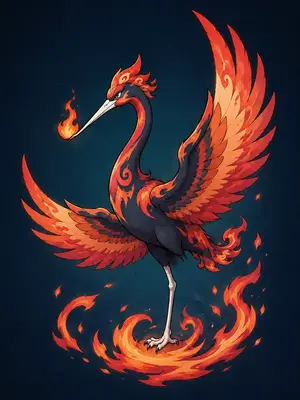 Bifang 毕方A one-legged crane with red markings on blue and a white beak. Where it appears, strange fires break out.
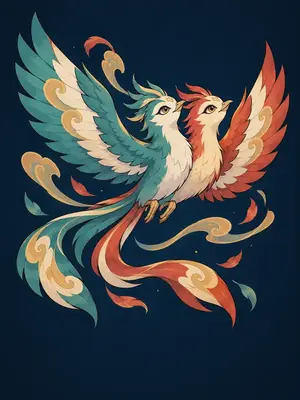 Biyi Bird 比翼鸟Two birds, one green and one red, flying wing to wing. Later poets made them a symbol of inseparable love.
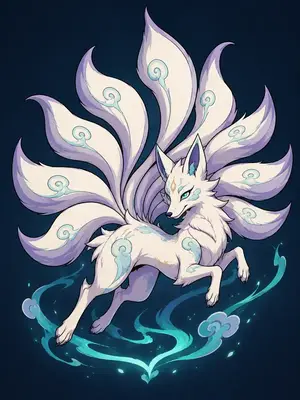 Nine-Tailed Fox 九尾狐A fox with nine tails and a cry like a baby's. It eats people, and eating it keeps curses away.
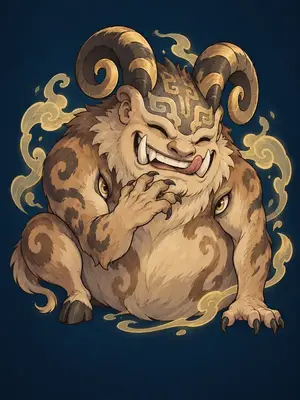 Taotie 饕餮A goat-bodied beast with a human face and eyes under its arms, so greedy it eats itself.
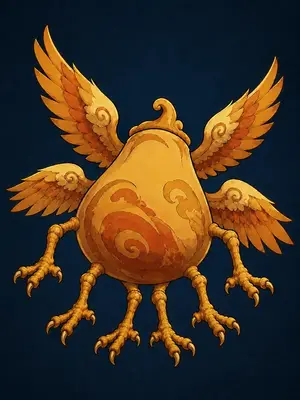 Hundun 混沌A faceless god like a red sack, with six legs and four wings. It has no eyes, yet it knows song and dance.
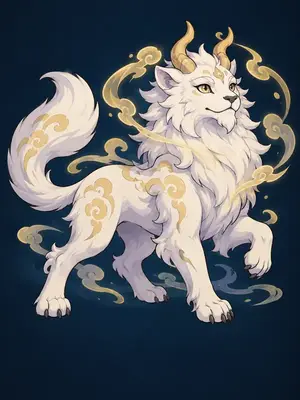 Bai Ze 白泽A talking beast that knows the nature of all things. Not in the Shan Hai Jing, but often counted among its creatures.