Kui, Chinese Mythology's One-Legged Thunder Beast
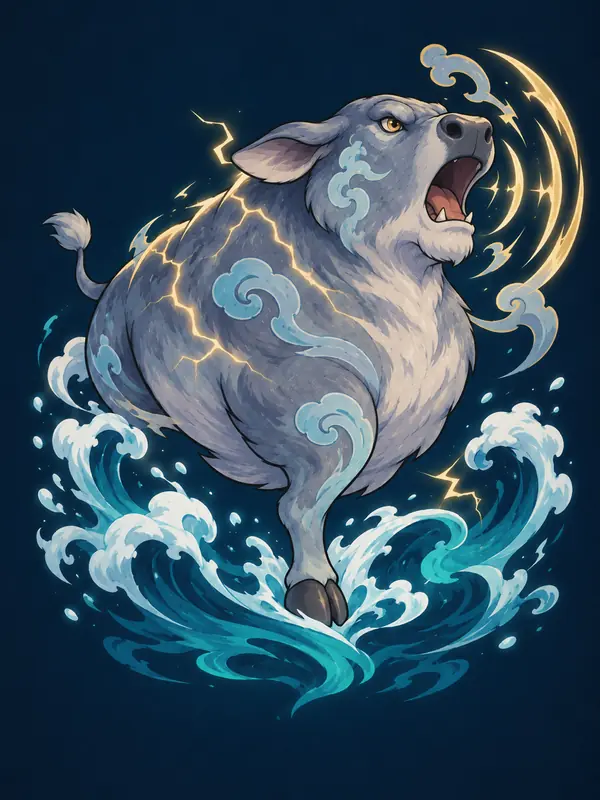
Kui lives on Mount Liubo in the Eastern Sea: a gray, hornless ox with one leg that shines like the sun and moon, roars like thunder and brings wind and rain.
- Chinese name
- 夔 (kuí)
- Oldest source
- Shan Hai Jing, Great Wilderness: East
- Where it lives
- Mount Liubo
- In the game
- Water beast · 4 Gold · Thunder Drum
What the Shan Hai Jing says
Kui appears near the end of the Great Wilderness: East, one of the later books of the Shan Hai Jing. The text places Mount Liubo in the Eastern Sea, seven thousand li out into the water, and says a beast lives on top of it. It is shaped like an ox, its body is gray or blue-gray, it has no horns and it stands on a single leg.
其上有兽,状如牛,苍身而无角,一足,出入水则必风雨,其光如日月,其声如雷,其名曰夔。黄帝得之,以其皮为鼓,橛以雷兽之骨,声闻五百里,以威天下。
On the mountain lives a beast like an ox, gray, hornless and one-legged. Wind and rain follow whenever it enters the water; it shines like the sun and moon and roars like thunder. It is called the Kui. The Yellow Emperor made a drum of its hide, beat it with a thunder-beast's bone, and it was heard 500 li away, awing the world.
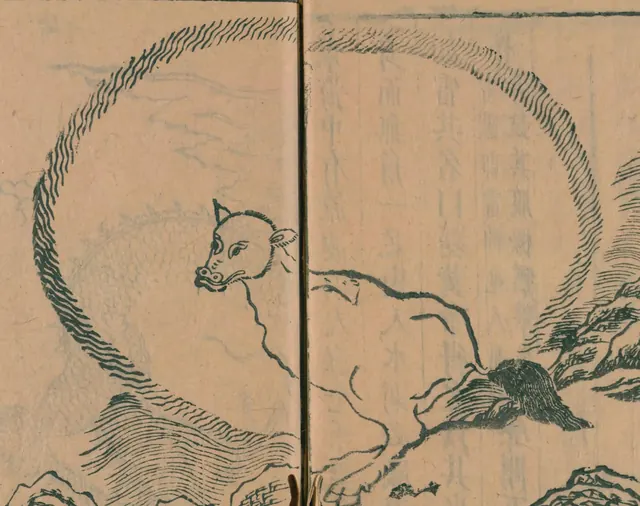
Everything else about it is weather. Whenever it goes into or comes out of the water, wind and rain follow. It gives off light like the sun and moon, and its voice is like thunder. The book then adds a short story: the Yellow Emperor caught the Kui, made a drum from its hide and beat it with a bone from the thunder beast. The sound carried five hundred li and filled the whole world with awe.
Why does Kui have one leg?
The single leg is the detail every later source repeats. The Shuowen Jiezi, the Han dynasty dictionary, defines kui as a kind of spirit creature, like a dragon with one foot. In the Zhuangzi, a Daoist classic, the Kui speaks to the millipede: it hops about on its one leg and cannot understand how the millipede manages so many. Even its gait is part of the legend.
There is also a famous pun. Kui was the name of the music master of the sage king Shun, and the Lüshi Chunqiu and the Hanfeizi both tell how a ruler asked Confucius whether it was true that "Kui had one foot". Confucius explained that the old saying meant "one Kui was enough": a single musician of his talent sufficed. The beast and the musician share both a name and a link to sound.
The drum of the Yellow Emperor
The drum story is told in very few words: the Yellow Emperor took the beast, turned its hide into a drum and used it to awe the world. Guo Pu, the 4th-century commentator, identifies the thunder beast whose bone became the drumstick with the thunder god of Thunder Marsh, described in Within the Seas: East as a god with a dragon's body and a human head who drums on his own belly. Thunder is beaten out of both of them, a fitting pair. Kui also lent its name to the kui dragon, a one-footed, side-view dragon motif on ancient bronzes, shown beside the Taotie face on many vessels. The same Great Wilderness: East also describes the winged dragon Yinglong.
Kui in our game
In Beasts of Shanhai Kui is a heavy water beast built around its drum. At the start of a battle it beats out thunder that stops the next enemy attack, and it drums again later in the fight, the way the Yellow Emperor's drum was meant to stop enemies with sound alone. It costs 4 Gold, one of the more expensive beasts, and at three stars each drumbeat also heals the whole team.
Thunder Ox in Beasts of Shanhai
In our free browser game Beasts of Shanhai, Thunder Ox is a Water beast that costs 4 Gold. Its skill is Thunder Drum. At battle start it drums, and the next foe to attack skips its turn; it drums 2 times per battle, again after round 2. At two stars it stuns 3 times, every 2 rounds, and at three stars each drum also heals all allies 10% of their max HP.
Questions
Why does Kui have one leg?
The Shan Hai Jing describes Kui as one-legged, and later texts such as the Shuowen Jiezi and the Zhuangzi repeat it. A story told in the Lüshi Chunqiu also plays on the phrase "Kui one foot", reading it as "one Kui is enough".
What did the Yellow Emperor do with Kui?
According to the Shan Hai Jing, he made a drum from its hide and beat it with the bone of the thunder beast. The sound was heard 500 li away and awed the world.
Is Kui the same as Kuiniu?
Yes. The original text simply calls it Kui; because it is shaped like an ox, it is often called Kuiniu, "Kui ox".
More creatures
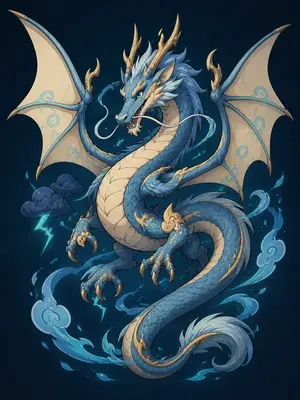 Yinglong 应龙A winged dragon that stores the rains. It killed Chiyou and Kuafu and now lives at the southern pole.
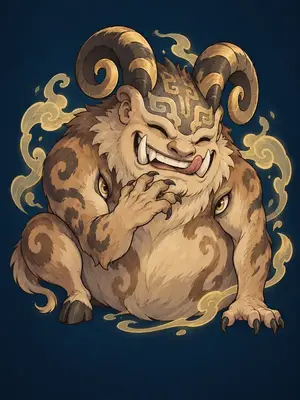 Taotie 饕餮A goat-bodied beast with a human face and eyes under its arms, so greedy it eats itself.
 Nine-Tailed Fox 九尾狐A fox with nine tails and a cry like a baby's. It eats people, and eating it keeps curses away.
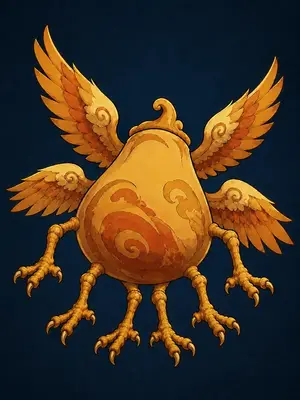 Hundun 混沌A faceless god like a red sack, with six legs and four wings. It has no eyes, yet it knows song and dance.
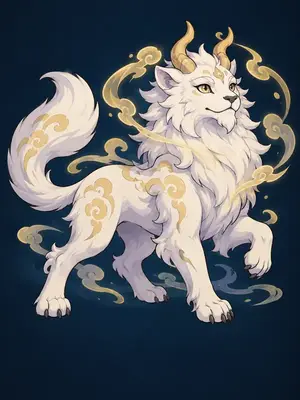 Bai Ze 白泽A talking beast that knows the nature of all things. Not in the Shan Hai Jing, but often counted among its creatures.
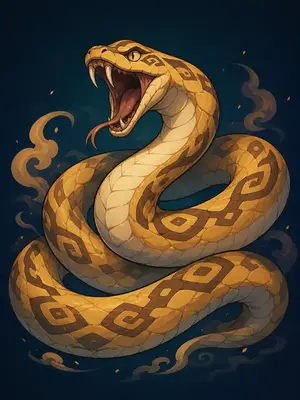 Bashe 巴蛇A huge snake of blue, yellow, red and black that swallows elephants and spits out the bones after three years.