Jiaochong, the Two-Headed Lord of Stinging Insects
On Mount Pingfeng lives Jiaochong, a god shaped like a man with two heads. He rules the stinging insects, and his mountain is the home of bees.
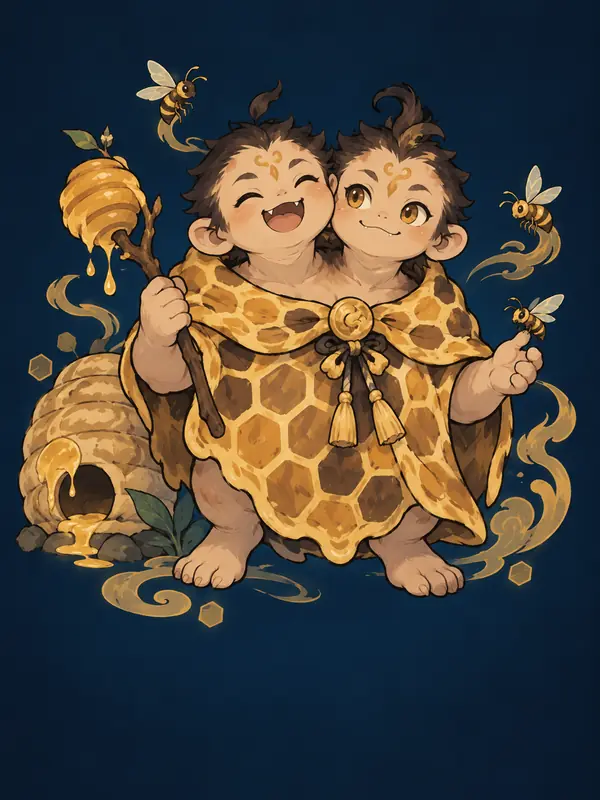
- Chinese name
- 骄虫 (jiāochóng)
- Oldest source
- Shan Hai Jing, Central Mountains, Book 6
- Where it lives
- Mount Pingfeng
- In the game
- Earth beast · 2 Gold · Sting
What the Shan Hai Jing says
Jiaochong is one of the few gods in the Shan Hai Jing whose domain is insects. He appears at Mount Pingfeng, the first mountain of the sixth book of the Central Mountains. The text describes the mountain as bare, with no plants and no water, only sand and stones, and says that from its top you can look south toward the Yi and Luo rivers.
有神焉,其状如人而二首,名曰骄虫,是为螫虫,实惟蜂蜜之庐。
A god lives here, like a man with two heads, called Jiaochong. He is lord of the stinging insects; this is the home of bees.
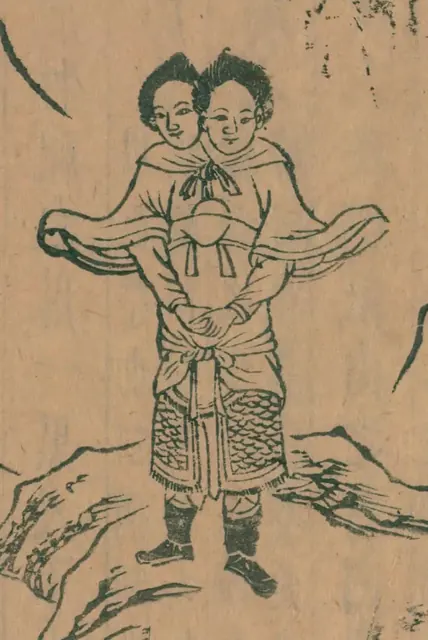
The god is shaped like a man but has two heads. His name is Jiaochong, and the book calls him the head of the stinging insects. It then adds that the mountain is truly the dwelling of bees. So the god is less a monster than a keeper: the bare slopes are the hive, and Jiaochong presides over everything that stings.
How he was worshipped
Most mountain entries end with a note on how the local spirits should be honoured, and Mount Pingfeng is no exception. The text says that Jiaochong is offered a single rooster, which is prayed over and then not killed. This is a gentle rite compared with the animal sacrifices given to many other mountain gods. The idea seems to be that a god of stinging insects is best kept calm. A pacifying rite at the edge of a bee mountain fits a world in which a swarm could be as real a danger as any beast.
Two heads and many stings
Two-headed beings turn up several times in the Shan Hai Jing, among both beasts and gods. Jiaochong stands out because the thing he rules is small and everyday: not a storm, a river or a season, but the insects that every farmer and traveller would have met. That makes him one of the most down-to-earth gods in the book. Another stinging creature in the book is the Qinyuan of Mount Kunlun, a bee as big as a duck whose sting kills beasts and withers trees.
Jiaochong in our game
In Beasts of Shanhai Jiaochong keeps his two heads and his rule over stinging insects. Because he is the lord of stinging insects, every exchange of blows with him leaves the other beast poisoned, so he is a slow, steady threat rather than a fast attacker. He belongs to the earth element and costs 2 Gold. His poison ignores shields, so even well-protected enemies wear down over a long fight, and his stack of poison grows with every star he gains.
Hive Lord in Beasts of Shanhai
In our free browser game Beasts of Shanhai, Hive Lord is a Earth beast that costs 2 Gold. Its skill is Sting. When it attacks or is attacked, the other beast gets Poison 1; each stack makes it lose 10% of its max HP every round and ignores Shield. It applies Poison 2 at two stars and Poison 3 at three stars.
Questions
Who is Jiaochong in the Shan Hai Jing?
A god of Mount Pingfeng, in the sixth book of the Central Mountains, shaped like a man with two heads. He is the lord of stinging insects.
Why is Jiaochong linked to bees?
The Shan Hai Jing says his mountain is truly the home of bees, and calls him the head of the stinging insects.
How was Jiaochong worshipped?
According to the text, he was offered one rooster, which was prayed over and then not killed.
More creatures
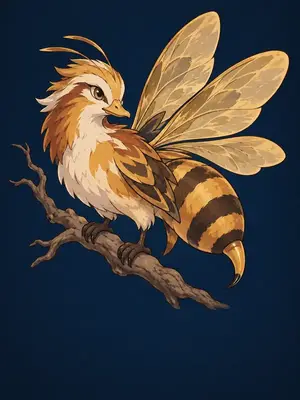 Qinyuan 钦原A bird shaped like a bee and as big as a mandarin duck. Its sting kills birds and beasts and withers trees.
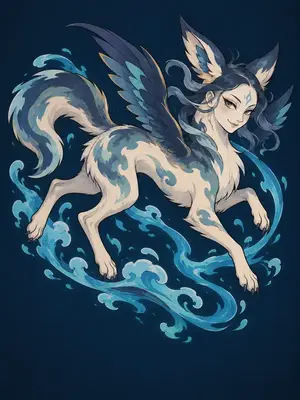 Huashe 化蛇A human-faced jackal with bird wings that slithers like a snake and shouts. When it appears, its town is flooded.
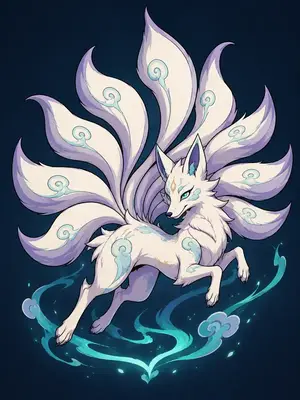 Nine-Tailed Fox 九尾狐A fox with nine tails and a cry like a baby's. It eats people, and eating it keeps curses away.
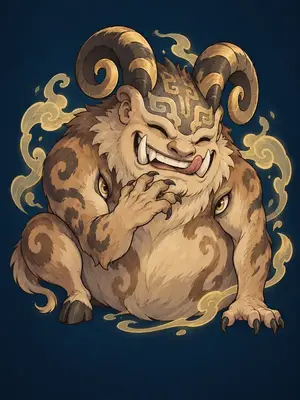 Taotie 饕餮A goat-bodied beast with a human face and eyes under its arms, so greedy it eats itself.
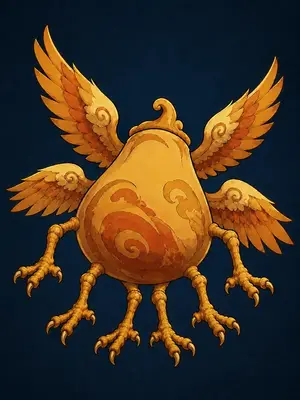 Hundun 混沌A faceless god like a red sack, with six legs and four wings. It has no eyes, yet it knows song and dance.
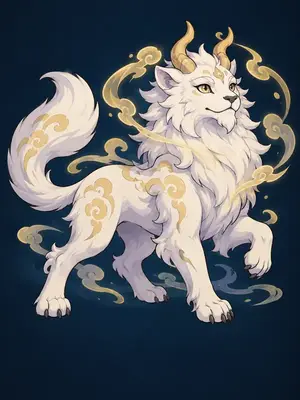 Bai Ze 白泽A talking beast that knows the nature of all things. Not in the Shan Hai Jing, but often counted among its creatures.